“I already have an Instagram page. Do I really need a website?”
It is the most reasonable question a busy business owner can ask, and for a long time the honest answer was “it depends.” In 2026 it is closer to “yes, and here is exactly why.” Social media is a brilliant place to be discovered and to stay in touch. It is a poor place to be chosen. The difference between the two is where a website earns its keep.
The credibility test happens in milliseconds
People decide whether they trust you almost instantly. Stanford’s long-running Web Credibility research found that 75% of consumers judge a company’s credibility based on its website. Other studies show a first impression of a site forms in around 50 milliseconds, and the overwhelming majority of that impression is about design and clarity.
Now think about what a customer sees when a friend recommends you and they search your name. If they find a real website, with your services, your prices, your work, and a way to contact you, the recommendation is confirmed. If they find only a social profile (or worse, nothing, or a competitor), the doubt creeps in. You did the hard part, earning the recommendation, and lost it at the last step.
What social media can’t do for you
Instagram and Facebook are rented land. You do not own the audience, the algorithm decides who sees your posts, and the platform can change the rules overnight. More practically, social media is missing the things a buying decision needs:
- It is not built to be found by search. When someone Googles “wedding photographer in your city,” your Instagram grid is not what shows up. A website is.
- It buries your key information. Your hours, prices, services, and location scroll away under your latest post. On a website they live on a page that is always there.
- It cannot take the action. A website can hold a booking calendar, a payment button, a quote form, a WhatsApp chat that lands the enquiry directly with you. A social post sends people to your DMs and hopes.
- You do not own it. Your followers, your content, your reach: all of it lives inside someone else’s app. Your website and your domain are yours.
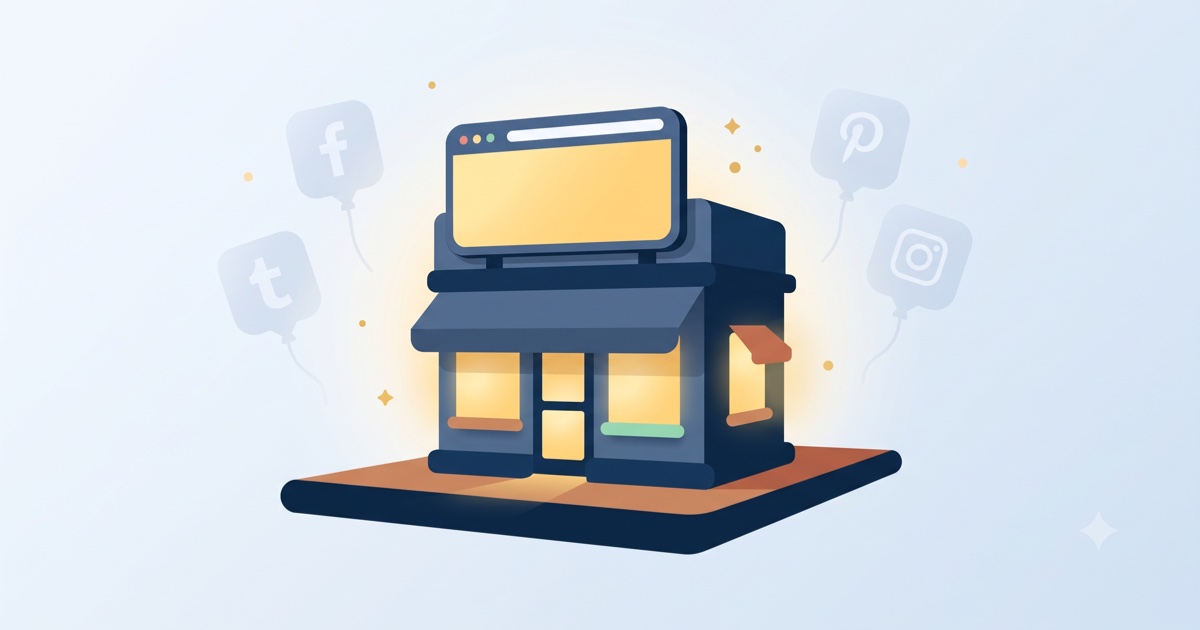
The strongest setup is not website or social. It is social to get discovered, and a website to convert that attention into a booking or a sale. Social brings people to the door; the website is the shop.
”But nobody has a website in my industry”
That is the opportunity, not the reason to skip it. As of 2025, roughly a quarter of small businesses still had no website at all. In plenty of local trades, being the one competitor with a clean, findable, trustworthy site is a genuine advantage, not table stakes.
We took six ordinary businesses, from a bakery to a family law firm to an AC repair service, and showed exactly what changed when each one got online. You can read those example builds here; the pattern is always the same. The work did not change. Being findable and trustworthy did.
What a small business website actually needs
A website is not a design project that takes months. For most businesses it is a handful of things done well:
- A clear headline that says what you do, who for, and where.
- Your services or products, each explained simply.
- Honest prices, or at least ranges, wherever you can.
- Proof: reviews, photos of real work, credentials.
- One obvious next step: book, call, WhatsApp, or order.
- A contact method that reaches you directly.
That is a website that earns its keep. It does not need a blog you will never write, a fancy animation, or ten pages nobody reads.
What about the cost?
This is usually the real reason behind the question, and it is fair. The old answer, thousands to an agency plus a bill for every change, is exactly why so many owners stuck with a free social page. We wrote a full, honest breakdown of what a small business website actually costs in 2026, agencies versus DIY versus subscription.
The short version: a complete website with bookings, payments, your own domain, hosting, and unlimited changes no longer needs to cost thousands or take weeks. A GoClickBuild site starts free and the full version is a low flat monthly price, with the same price at renewal and no fee on what you earn. See the pricing and the honesty table.
Frequently asked questions
Do I need a website if I have Facebook and Instagram? Yes. Social media helps people discover you, but it does not show up well in Google searches, it buries your key information, and you do not own the audience. A website is where people confirm you are real and take the next step: book, buy, or contact you. Use both together.
Is a website worth it for a small local business? For most local businesses, yes. Around 75% of consumers judge credibility by the website, and roughly a quarter of small businesses still have none, so a clean, findable site is often a real edge over nearby competitors rather than just keeping up.
How much does a small business website cost? It ranges from a weekend of your time on a DIY builder to thousands for an agency build. A subscription platform like GoClickBuild starts free, with a full site (bookings, payments, domain, hosting, unlimited changes) at a low flat monthly price. See our full cost guide.
Can I build a website myself without technical skills? Yes. Modern platforms build the site for you from a few plain answers about your business, and you change anything later by typing what you want. No code, no designer. Here is how it works.
The bottom line
Social media is where people find you. A website is where they decide about you. In 2026, with credibility judged in milliseconds and a quarter of your competitors still invisible, the business with a real website is the one that gets chosen. And getting one no longer costs what it used to, or takes longer than 30 minutes.